
CrossFlow Separator
Innovative Mineral Classification
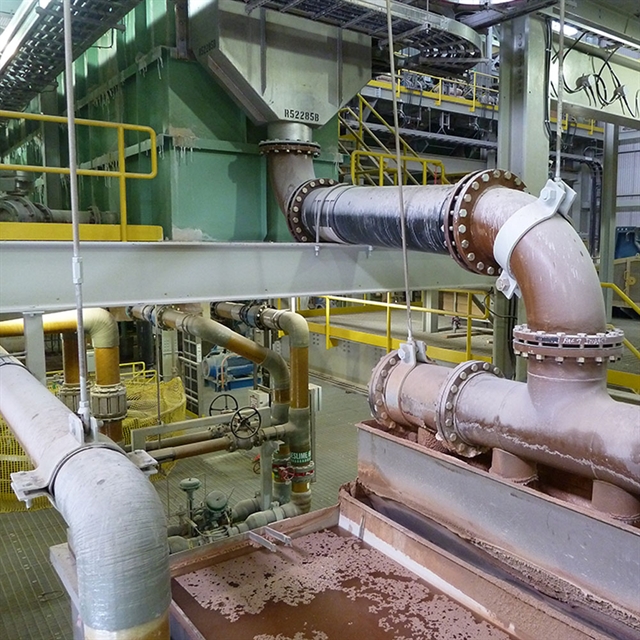
The CrossFlow Separator is a hydraulic classifier that uses a teeter-bed (fluidized bed) principle to efficiently separate solids based on size, shape, and density. Designed to deliver sharp separations. It offers a low-maintenance, high-efficiency solution for gravity-based and size classification.
The CrossFlow uses an upward flow of water (called fluidizing water) to create a teeter-bed of suspended solids inside the separator. Particles settle through this bed based on their terminal settling velocities. Finer, lighter particles are elutriated into the overflow, while coarser, denser particles pass through the underflow.
Key to its performance is the top-fed slurry design, which minimises turbulence and ensures stable and repeatable separation conditions. The bed of solids behaves like a fluid, where particle interactions are carefully balanced by hydrodynamic forces.
Applications
Using hindered-settling principles, the CrossFlow efficiently classifies, concentrates, washes, and neutralizes minerals. Its counter-current washing capability ensures optimal rinsing and contaminant removal before downstream processing.
- Sizing & Classification
- Tailings Classification (clean sand production)
- Density Separation & Concentration
- Washing & Neutralization
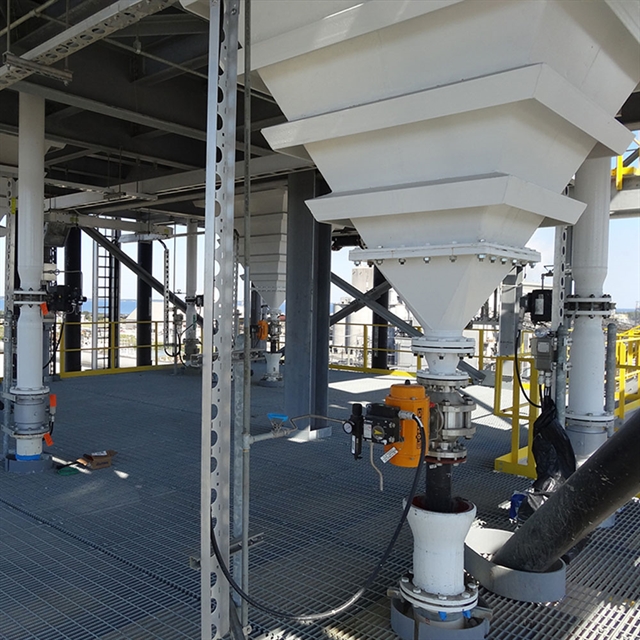
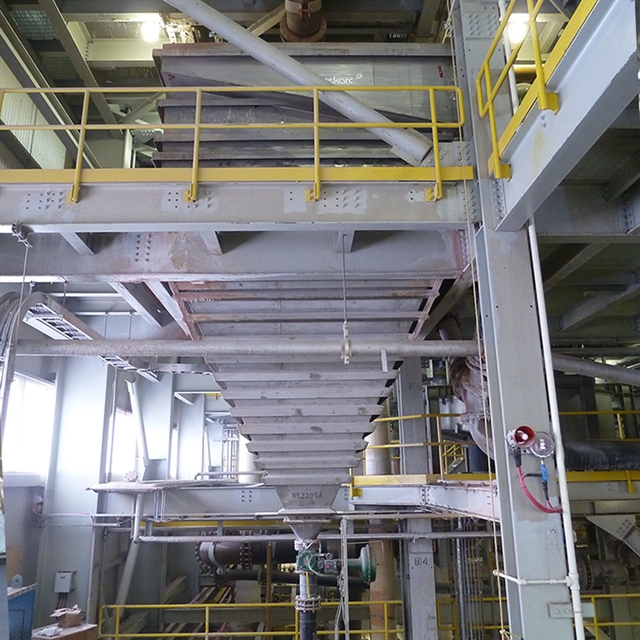
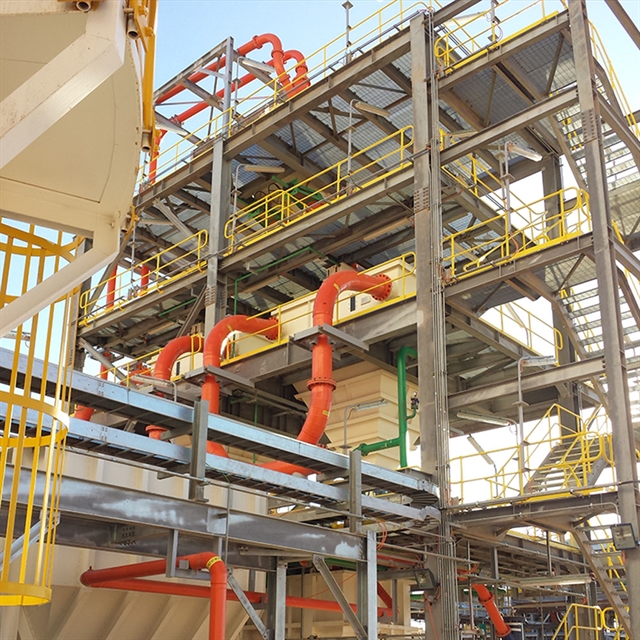
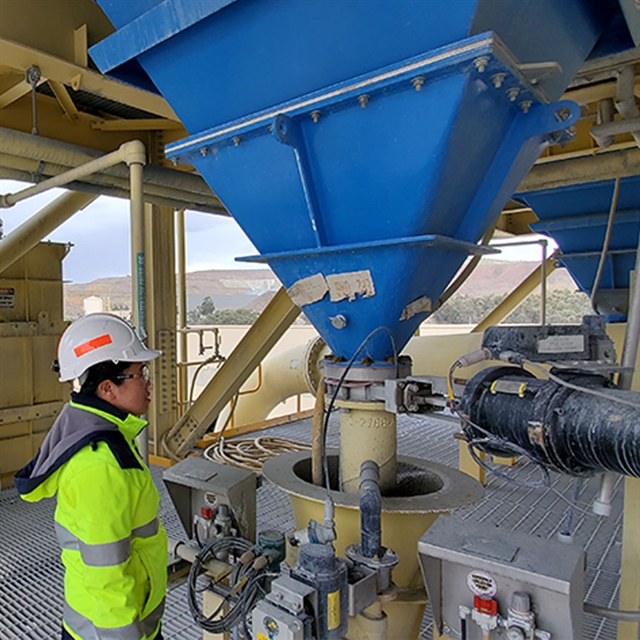
Process Different Types of Ores
- Phosphate
- Potash
- Lithium
- Iron ore
- Coal
- Heavy minerals
- Mineral sands
- Others


Benefits
Superior Separation Efficiency
- Achieves sharp cut sizes (d₅₀) with minimal misplaced fines
- High selectivity in separating particles based on size and density
- Enables cleaner flotation feed or product streams
Lower Operating Costs
- Lower energy demand compared to hydrocyclones or vibrating screens
- Reduced maintenance requirements
- Increased equipment life and up time
- Ideal for operations in remote or high-wear environments
Intelligent Control & Automation
- Equipped with sensors to monitor bed pressure and water flow
- Enables real-time control adjustments for optimal performance
- Seamless integration into modern control systems (PLC/DCS)
Features
The CrossFlow is a high-capacity, fluidised-bed separator engineered to classify or separate fine particles based on differences in size, shape and density. Its innovative design introduces feed slurry across the top of the unit, allowing material to descend in a similar plug flow pattern against a uniform upward flow of fluidisation water. This unique counter-current arrangement maintains a consistent vertical velocity profile across the entire cross-sectional area of the unit, significantly enhancing separation sharpness and reducing bypass.
Built with durability and simplicity in mind, the CrossFlow operates without any internal moving parts. Instead, it uses a distributed system of teeter water — delivered through a network of injection pipes and nozzles — ensuring even fluidisation across the entire transversal section. The absence of mechanical wear components minimises maintenance and maximises uptime, making the CrossFlow ideal for coarse desliming, gravity separation, or sharp cut-point classification applications.
A key feature of the CrossFlow is its advanced control of critical operating variables. Teeter water flow rate, bed pressure, and bed level can be precisely monitored and adjusted to tailor the separation performance to the desired cut size or specific material characteristics. Bed level acts as a fine-tuning parameter, allowing operators to control the quantity of retained coarse particles and influencing the sharpness of separation. Similarly, adjusting the fluidisation velocity shifts the effective cut point, enabling dynamic control over separation conditions. These flexible control parameters give the CrossFlow unmatched versatility across a wide range of ores and operating environments.

Product Line
The CrossFlow separator is available in a range of standardised models to meet the classification and separation needs of diverse mineral applications, from laboratory-scale, pilot-scale testing to full-scale industrial processing.
Each model follows a clear naming convention based on its nominal referential feed capacity (in tons per hour, dry basis). For example, the CrossFlow XF-250 is designed to handle approximately 250 t/h of feed material (dry basis) under nominal conditions. However, actual capacity may vary depending on specific ore characteristics, feed particle size distribution, ore SG, cut size targets, and operating conditions. For each application, Eriez engineers provide detailed equipment sizing based on lab and pilot-scale testing combined with historical process data to ensure optimal performance.

| Model | Feed Capacity (t/h) | Width (mm) | Length (mm) |
|---|---|---|---|
| XF-30 | 30 | 1500 | 1500 |
| XF-50 | 50 | 1800 | 1800 |
| XF-80 | 80 | 2400 | 2400 |
| XF-130 | 130 | 3050 | 3050 |
| XF-150 | 150 | 3300 | 3300 |
| XF-200 | 200 | 3650 | 3650 |
| XF-250 | 250 | 4250 | 4250 |
*All capacities are in long tons.
Installations
With more than 100 CrossFlow units installed and operating in world-class mineral processing facilities across North America, South America, Australia, Asia, and Africa, the CrossFlow has earned a strong reputation for reliability, performance, and operational simplicity. These installations span a wide range of applications — including desliming, density separation, and cut-point classification — in both base metal and industrial mineral operations.
CrossFlow’s track record of success demonstrates its ability to enhance classification efficiency, reduce circulating loads, and contribute to improved downstream recovery and overall plant profitability. For the latest reference list of CrossFlow installations and case studies, please contact Eriez.
 Brochures & Technical Papers
Crossflow Separator - Eriez’ CrossFlow Separator is a highly efficient hydraulic classifier for the separation of material based on particle size, shape and/or density. This technology can also be used for desliming, counter-current washing and acid neutralization of minerals.

Fertilizer Applications - Eriez has developed several technologies that can improve the separation of fertilizer minerals through flotation. These technologies incorporate improved methods of air sparging and particle contacting for coarse, fine, and ultra-fine particles.
Applications of the CrossFlow Teeter-Bed Separator in the U.S. Coal Industry - Teeter-bed (i.e., hindered-bed) separators are used throughout the mineral processing industry for both classification and density separation. The high capacity and sizing characteristics of these units make them ideal for feed preparation prior to coarse flotation (+0.100 mm) circuits.
Industrial Applications of the CrossFlow Separator - Laboratory and pilot-scale test data have shown that the innovative feed presentation of the CrossFlow separator provides improved metallurgy when compared to traditional hindered-bed or teeter-bed classifiers.
Applications of the CrossFlow Separator in the US Coal Industry - Hindered-bed separators are recognized as low-cost, high-capacity devices for both classification and density separation; however, since their inception, there have been few significant advances in the fundamental technology